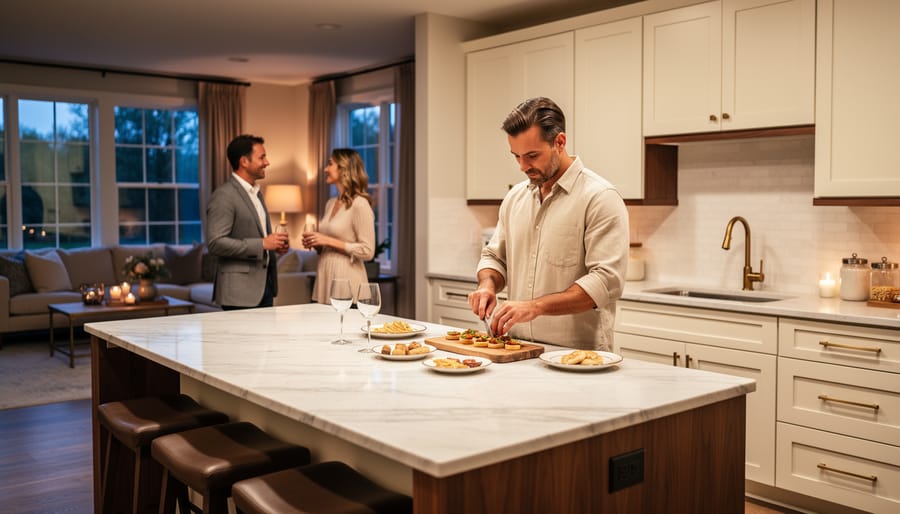
The best kitchens for entertaining combine smart workflow zones, visible sightlines to your guests, and surfaces that can handle both prep and conversation. Creating a space that actually works when you’ve got people over means thinking beyond countertop aesthetics to how your kitchen moves, how easily you can serve, and where everyone naturally gathers.
If you’ve ever found yourself trapped behind a closed-off kitchen wall while your friends chat in the living room, or scrambling to find counter space for appetizers when you’re already prepping the main course, you know exactly what your home needs. Most kitchen renovations focus on personal cooking habits, but hosting adds an entirely different set of requirements. You need flexible surfaces, clever storage that keeps clutter invisible when guests arrive, and design elements that encourage people to linger comfortably without blocking your workflow.
The good news? You don’t need a chef’s kitchen or unlimited square footage to create a host-friendly space. Whether you’re planning a full renovation or working with what you have, certain strategic upgrades deliver outsized benefits when it comes to entertaining. Some are investment pieces that change how your kitchen functions. Others are surprisingly affordable tweaks that make hosting feel less like a logistical puzzle and more like the enjoyable experience it should be.
How We Chose These Kitchen Design Ideas
We curated these kitchen design ideas with real-world entertaining in mind, not just magazine-perfect aesthetics. Each suggestion needed to pass a practical test: does it genuinely make hosting easier, or does it just look impressive? We prioritized features that let you cook, chat, and connect with guests simultaneously rather than designs that isolate the host behind a stove.
Our selection criteria focused on:
- Creating natural gathering spots that encourage conversation without crowding work zones
- Reducing hosting stress through smart accessibility and workflow improvements
- Accommodating different entertaining styles, from casual weekend brunches to formal dinner parties
- Offering scalable options that work across various kitchen sizes and renovation budgets
- Balancing everyday functionality with party-ready features you’ll actually use year-round
We also consulted with kitchen renovation specialists in Kitchener-Waterloo to understand which upgrades deliver the best return on investment for frequent entertainers. The result is a collection of achievable ideas that transform your kitchen into a space where hosting feels effortless rather than exhausting, whether you’re serving eight people or just a few close friends.
1. Open-Plan Layout with a Kitchen Island Bar
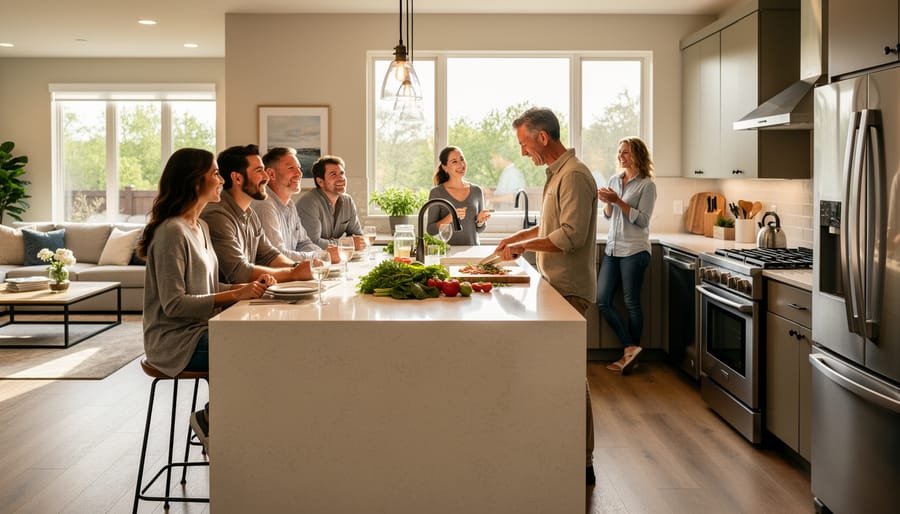
An open-plan kitchen with an island bar transforms your space from a solo cooking zone into the natural hub where everyone gravitates during gatherings. Instead of facing a wall while you chop vegetables or stir sauces, you’re positioned where conversation flows easily. Guests perch on stools across from you, drink in hand, sharing stories while you work. This setup eliminates that awkward dynamic where the host disappears into the kitchen while everyone else clusters in the living room.
The magic lies in getting the dimensions right. Standard counter height sits at 36 inches, but raising the guest-facing side to bar height, around 42 inches, creates a subtle boundary that keeps traffic from spilling into your prep area while maintaining sight lines. Most islands comfortably fit three to four stools along one side, though even space for two makes a difference when you’re hosting.
Choose stools without backs if space is tight, since guests can tuck them completely under the overhang when not in use. Allow at least 24 inches of counter width per person, and make sure there’s a 10-inch overhang so knees don’t bang against cabinets. Add outlets along the island’s side for plugging in mixers or phone chargers, keeping cords from stretching across your workspace.
This layout does more than prevent isolation. It actively includes guests in the experience, turning meal preparation into part of the entertainment itself.
2. Beverage Station with Mini Fridge and Glassware Storage
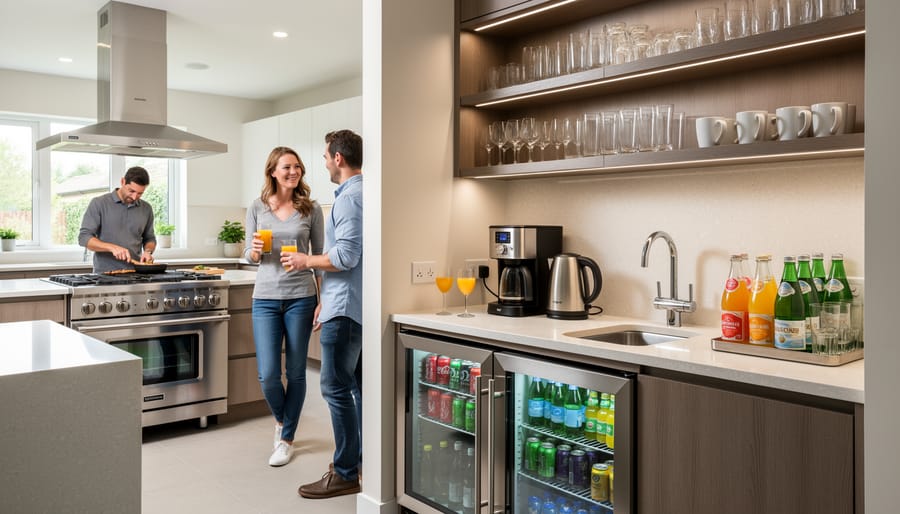
A dedicated beverage station transforms how you host by giving guests the freedom to refresh their own drinks while you focus on cooking. Set up a corner of your kitchen with a mini fridge stocked with wine, beer, sparkling water, and mixers. Add a small countertop ice maker if you have the space, it’s a game-changer for parties where ice runs out fast.
Store glassware on open shelves or in a glass-front cabinet above the beverage area so guests can easily grab what they need. Include wine glasses, tumblers, and stemless options for different preferences. A small tray with cocktail napkins, a wine opener, and a bottle opener completes the setup and signals to guests that this space is theirs to use.
This arrangement keeps traffic flowing smoothly through your kitchen. Instead of everyone congregating around the main fridge or asking where things are, guests help themselves and you handle cleanup without stress later. Position the station near your main entertaining area but away from the stove and primary prep zone. If you’re working with limited space, a bar cart on wheels offers the same self-serve convenience and can roll out of the way when the party’s over.
3. Double Ovens or a Warming Drawer
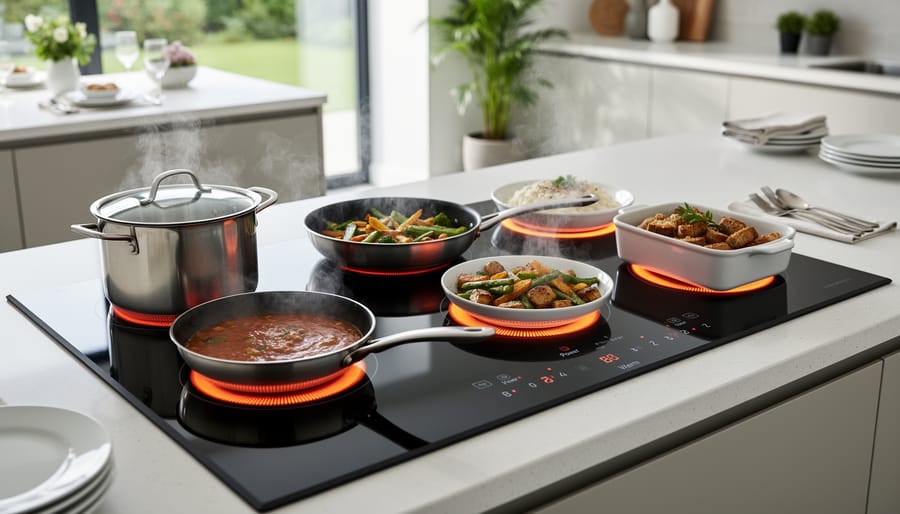
When you’re hosting a dinner party or holiday meal, oven space becomes precious real estate. Installing double wall ovens transforms how you manage multiple dishes, you can roast a turkey in one oven while baking sides in the other, all at different temperatures. This means no more juggling cook times or watching your carefully planned menu fall apart because everything needs the oven at once.
A warming drawer offers different magic. Tucked beneath your main oven, it keeps finished dishes at ideal serving temperature while you plate the rest of the meal. Your roasted vegetables stay crisp and hot, your dinner rolls remain warm, and nobody eats lukewarm food because you were busy with last-minute prep. It’s particularly brilliant for casual entertaining when guests arrive at different times, appetizers stay fresh without drying out under heat lamps.
The practical benefits extend beyond cooking capacity. With double ovens, you reduce that frantic last-hour stress when three dishes need to finish simultaneously. A warming drawer means less rushing between kitchen and table, giving you actual time to enjoy your guests instead of orchestrating a military-precision plating operation.
These features shine brightest during the holidays when you’re cooking for a crowd, but they prove their worth year-round. Even a simple dinner party feels more manageable when your kitchen’s designed to handle complexity, and post-meal easy cleanup tips become simpler when food hasn’t been sitting out for hours.
4. Oversized Sink with Pot Filler
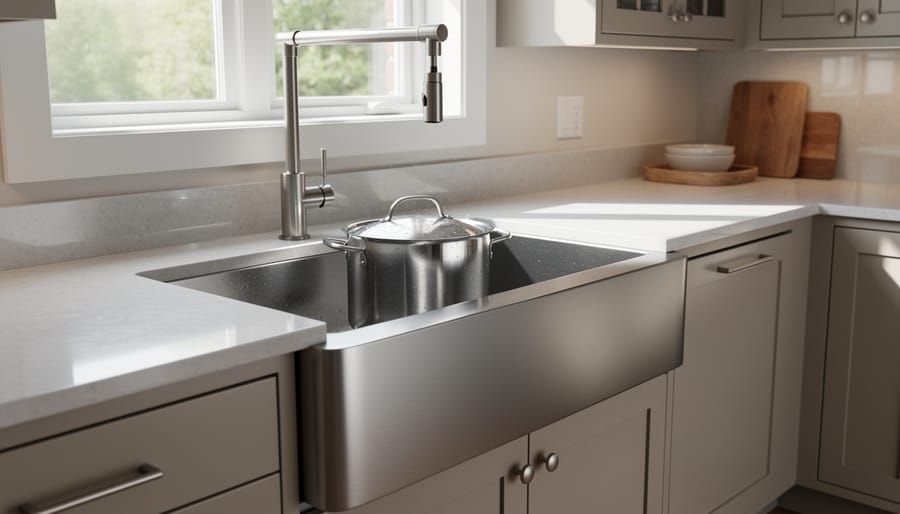
A generous sink transforms how smoothly you can entertain. When you’re hosting, those last-minute rinses and quick cleanups happen constantly, washing spinach for a salad, rinsing wine glasses between courses, filling water pitchers. An oversized farmhouse or undermount sink gives you the room to handle large serving platters, roasting pans, and stockpots without the Tetris puzzle of standard-sized basins. You’ll appreciate the depth when you need to soak a big lasagna dish or hide a pile of prep bowls out of sight while guests are still arriving.
The pot filler faucet mounted at your stovetop is one of those upgrades that seems luxurious until you realize how practical it becomes. Fill that eight-quart pasta pot right where you’ll cook it instead of wrestling a heavy, sloshing container from sink to stove. Making stock for risotto or boiling water for corn on the cob turns into a one-step process. For hosts who frequently cook for crowds, this simple addition saves your back and speeds up meal prep.
Together, these features mean less running around during your gathering and fewer moments when you’re stuck at the sink instead of with your guests. That efficiency translates directly into more relaxed hosting and a kitchen that supports your entertaining rhythm rather than fighting against it.
5. Open Shelving for Easy-Access Serving Pieces
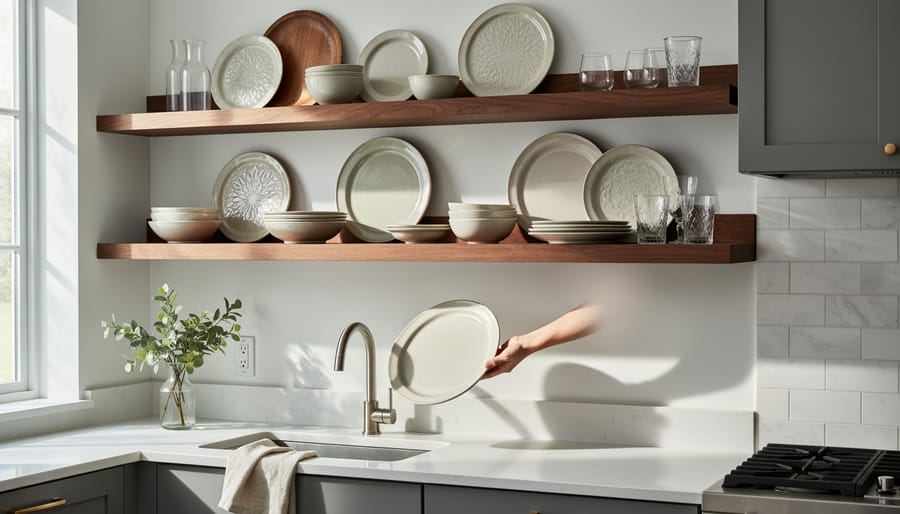
Open shelving transforms your serving pieces from hidden storage into part of your kitchen’s character while making hosting significantly smoother. When you’re juggling multiple dishes and guests are arriving, the last thing you need is to dig through stacked cabinets searching for that oversized platter or the perfect bowl for salad.
Installing open shelves near your serving and prep areas means everything you need is visible and reachable in seconds. You can grab dishes with one hand while stirring with the other, and there’s no fumbling with cabinet doors when your hands are full. This setup naturally encourages you to keep only what you actually use for entertaining, which means the pieces you reach for most often are always at your fingertips.
The visual aspect matters too. Displaying your favorite serving dishes, colorful bowls, or vintage platters adds warmth and personality that closed cabinets simply can’t provide. Stack plates by color, arrange glassware by type, or showcase those beautiful pieces you inherited but rarely see. Your kitchen tells a story about how you entertain and what matters to you.
Keep everyday dishes in closed cabinets to reduce visual clutter, and reserve open shelving for pieces that are both beautiful and party-ready. A light dusting before guests arrive keeps everything fresh, and the trade-off in maintenance is minimal compared to the convenience and charm these shelves bring to your entertaining space.
6. Expanded Counter Space with Smart Storage Underneath
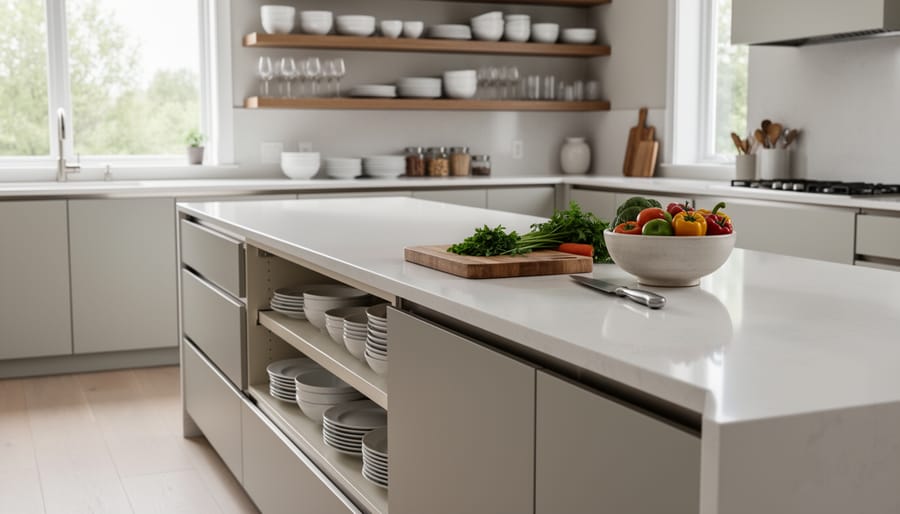
When you’re plating appetizers while your best friend assembles a salad and someone else pours wine, you need counter space, and lots of it. Generous prep areas don’t just make cooking easier; they transform your kitchen into a collaborative space where guests naturally pitch in without bumping elbows or feeling like they’re in the way.
The magic happens when you pair expansive countertops with smart storage that keeps those surfaces completely clear. Pull-out cutting boards tucked beneath the counter provide extra workspace exactly when you need it, then disappear after use. Appliance garages hide your coffee maker, toaster, and mixer behind cabinet doors or retractable panels, maintaining clean sightlines while keeping everything accessible. Deep drawers organized with dividers store pots, pans, and serving pieces where you can reach them in seconds.
This combination solves the eternal hosting dilemma: where to put everything when you’re using everything. A spacious island or extended counters give multiple people room to work comfortably together, chopping vegetables, arranging cheese boards, or setting out dessert, while clever concealed storage ensures you’re not shoving things aside or stacking dirty bowls in corners.
The result feels effortless. Guests see beautifully open surfaces and assume you’ve got it all together, while you know the real secret is simply having a designated home for every tool and appliance, keeping your entertaining space as functional as it looks inviting.
7. Statement Lighting Above the Island or Dining Area
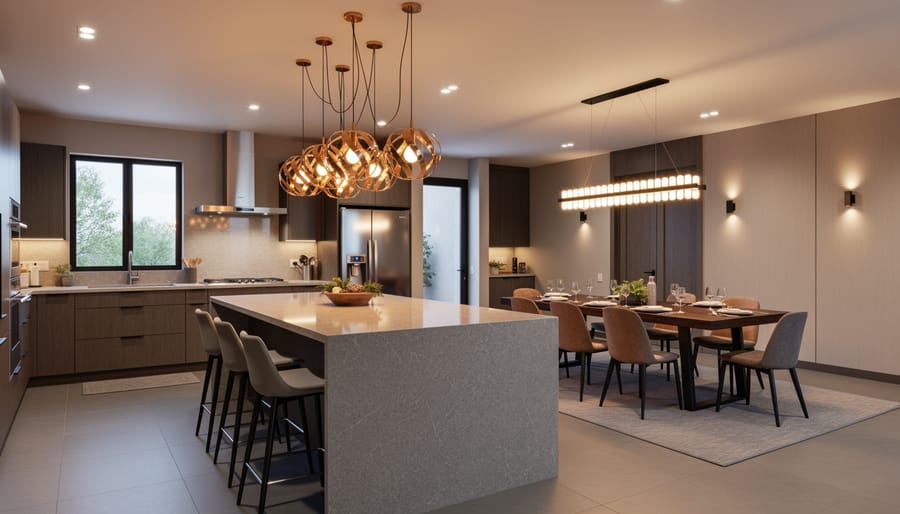
The right lighting transforms your kitchen from a functional workspace into a warm, inviting gathering spot. Statement fixtures above your island or dining table do double duty: they mark the entertaining zone visually while giving you control over the room’s mood. Choose fixtures on dimmer switches so you can dial up brightness when chopping vegetables or plating dishes, then soften the glow when guests settle in for dinner and conversation.
Scale matters here. A single oversized pendant or a trio of smaller ones hung at varying heights creates visual interest without overwhelming the space. For islands, aim for fixtures that hang about 30 to 36 inches above the countertop, high enough that no one bumps their head, low enough to cast flattering light on faces and food. Chandeliers work beautifully over dining tables, adding a touch of elegance that signals this is where special moments happen.
Consider the style too. Industrial metal pendants suit modern kitchens and provide focused task lighting. Glass globes or woven materials soften the look and spread light more diffusely, perfect for creating that relaxed dinner party vibe. These fixtures become conversation pieces themselves, similar to how thoughtful engagement ideas draw people together around shared experiences. The light you choose shapes how your guests feel in your space, so pick something that reflects your entertaining personality.
8. Built-In Seating Nook or Banquette
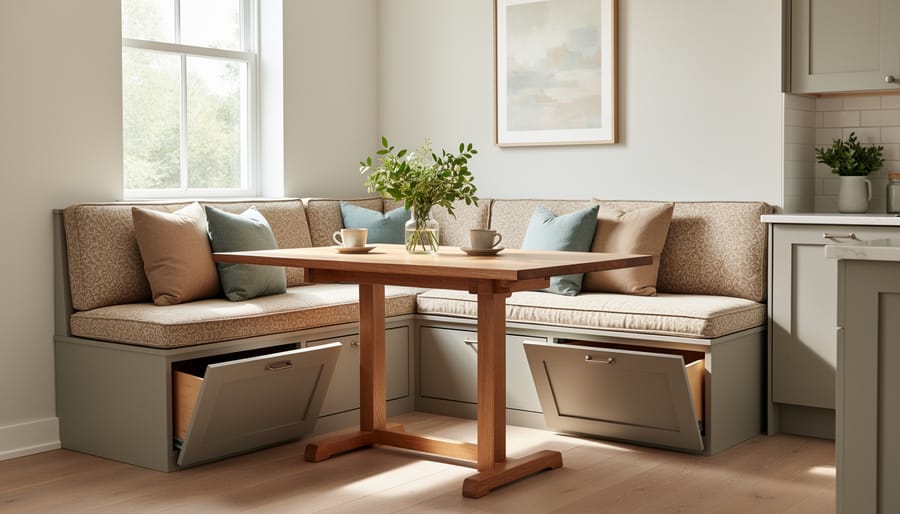
A built-in seating nook transforms an underused corner into one of the most inviting spots in your kitchen. These cozy banquettes create an intimate gathering space where guests naturally linger over morning coffee or settle in for a casual meal, and they work beautifully in kitchens where a traditional dining table might feel too formal or take up too much room.
The magic of a banquette is how it maximizes every inch. Built-in seating tucks neatly against walls or windows, often accommodating more people than freestanding chairs would in the same footprint. You can squeeze in an extra friend or two for brunch without dragging chairs from other rooms, and the bench format encourages that relaxed, communal vibe that makes guests feel at home.
Beyond seating, the real bonus hides beneath. Lift-up seats or pull-out drawers underneath provide surprisingly generous storage for table linens, serving platters, or seasonal entertaining pieces you don’t need every day. This keeps your kitchen organized while adding function to a spot that might otherwise go unused.
When you choose the right upgrade consider upholstery that balances comfort with practicality. Performance fabrics stand up to spills and regular use, while plush cushions make guests want to stay awhile. Pair the nook with a simple table and good lighting, and you’ve created a space that handles everything from weekday breakfasts to long, lingering dinner parties with equal grace.
What to Watch For
The biggest pitfall when designing for entertaining is prioritizing wow factor over workflow. That stunning 10-foot island might look incredible, but if it blocks the natural path between your fridge and stove, you’ll curse it every morning while making breakfast. Test your current traffic patterns during busy cooking times before finalizing any layout changes.
Budget creep happens fast with kitchen projects. Start by identifying your non-negotiables, maybe that’s the beverage station or expanded counter space, and protect those items in your budget first. You can always add statement lighting or upgrade to open shelving later, but changing a layout after construction is exponentially more expensive.
Don’t forget about cleanup reality. Beautiful open shelving requires regular dusting, and that extra sink space means nothing if you don’t have a good dishwasher nearby. Think through the entire entertaining cycle from prep to cleanup, not just the glamorous hosting moments your guests see.
Making Your Kitchen the Heart of Every Gathering
The best entertaining kitchen isn’t necessarily the biggest or the most expensive, it’s the one that removes friction between you and your guests. When you can fill wine glasses without abandoning a conversation, when friends naturally gravitate to the island while you plate appetizers, when cleanup doesn’t mean disappearing for an hour after dinner, that’s when your kitchen becomes the gathering place you’ve always wanted.
You don’t need to implement all eight ideas tomorrow. Maybe you start with open shelving to make serving pieces accessible, or you add a beverage station so guests can help themselves. Perhaps the oversized sink becomes your game-changer, or statement lighting transforms your space. The magic happens when you select the features that align with how you actually host, whether that’s casual weekend brunches, elaborate dinner parties, or spontaneous gatherings that stretch into the evening.
Your kitchen tells a story about connection and generosity. These design choices simply make that story easier to live every single day, turning the space where you cook into the place where memories happen. Because the best gatherings aren’t about perfection, they’re about bringing people together in a space that welcomes them warmly and lets you enjoy the moments alongside them.
Frequently Asked Questions
What’s the ideal kitchen island size for entertaining?
A good rule of thumb is to allow 24 inches of width per seated guest, so a 72-inch island comfortably seats three people. Make sure there’s at least 42 inches of clearance on all sides so guests and the host can move around freely without bumping into each other.
Can I create an entertaining kitchen on a budget?
Absolutely. Start with simple changes like adding a rolling bar cart for beverages, installing open shelving for accessible serving pieces, and upgrading your lighting with dimmable fixtures. These updates make a real difference in how your kitchen functions for guests without requiring a full renovation.
How do I design for entertaining in a small kitchen?
Focus on creating clear zones and maximizing counter space by using wall-mounted storage and fold-down surfaces. A small peninsula or extended countertop can serve as a gathering spot, and a portable island on wheels gives you flexibility to rearrange when guests arrive.
What’s the single best upgrade for a host-friendly kitchen?
If you can only make one change, add seating at your island or peninsula. It transforms the kitchen from a solitary workspace into a social hub where guests naturally congregate, keeping you company while you cook instead of leaving you isolated.
These questions come up constantly from readers planning kitchen updates, and the answers reflect what actually works in real homes. The key is remembering that entertaining-friendly design isn’t about having the fanciest kitchen on the block. It’s about thoughtful choices that let you spend more time with your guests and less time shuttling between rooms or apologizing for the chaos.