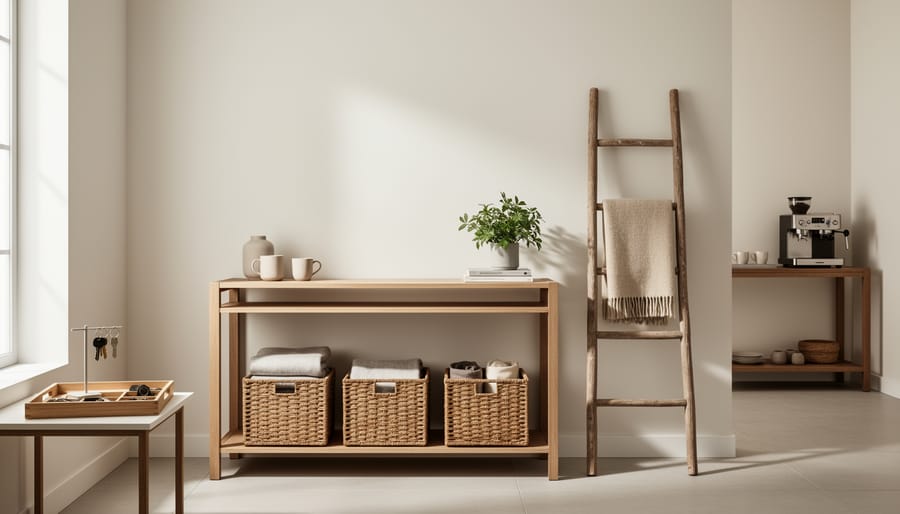
Start by decluttering one room at a time instead of tackling your entire house at once. Choose a space that frustrates you most, whether that’s the overflowing entryway or the chaotic kitchen counters, and clear out anything that doesn’t serve a purpose or bring you joy. Just as Dryer Vent Clean Experts recommend regular maintenance to prevent bigger problems, this focused approach prevents overwhelm and lets you see real progress within a single afternoon.
Create zones for specific activities throughout your home. Designate a landing spot near your front door for keys, bags, and mail. Set up a coffee station in your kitchen with everything you need in one compact area. These simple systems save you from hunting down items every morning and make your daily routines flow more smoothly.
Invest in storage solutions that double as decor pieces. Woven baskets tucked under console tables hide clutter while adding texture to your rooms. Vintage ladders lean against walls to display throws and magazines. Open shelving showcases beautiful dishware while keeping everyday items within reach. The best organizational tools shouldn’t apologize for their existence but instead enhance your personal style.
Think about maintenance as part of your organization strategy. A beautifully arranged home falls apart quickly without regular upkeep. Schedule 15 minutes each evening for a quick reset, putting items back in their designated spots before clutter accumulates.
Your home should work for your real life in 2026, not some impossibly perfect magazine spread. If you have kids, embrace accessible toy storage they can manage themselves. If you work from home, carve out a dedicated workspace that separates professional time from relaxation. The right organizational systems adapt to your habits rather than forcing you to change who you are. Let’s explore practical strategies that blend beautiful aesthetics with genuine functionality for every room in your home.
The Room-by-Room Reset: Where Function Meets Beauty
Living Spaces That Actually Work for Living
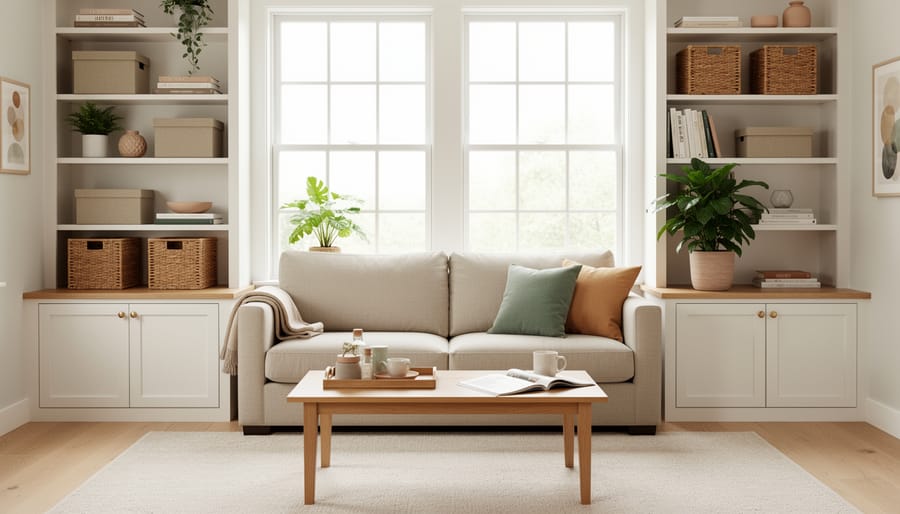
Your living room tells you exactly what it needs when you walk through the door at the end of a long day. If you’re stepping over toys, shuffling magazines off the couch, or feeling visually overwhelmed before you even sit down, that’s your space asking for help.
The secret to a living room that works is creating zones without walls. A console table behind the sofa becomes a landing pad for keys and mail while visually anchoring the furniture arrangement. Ottoman storage holds throw blankets where you actually use them. A pretty basket beside your favorite chair corrects the magazine pile problem while adding texture to the corner that felt empty.
Furniture arrangement matters more than most people realize. Floating your sofa away from the wall, even just eighteen inches, creates flow and makes the room feel larger. Angling chairs toward the sofa invites conversation, while a reading nook facing the window serves solo relaxation without fighting the main seating area.
Here’s how to reclaim your living space this weekend:
- Clear one surface completely and keep it that way as your visual anchor
- Add a decorative tray to corral remotes and coasters on the coffee table
- Swap out open shelving chaos for matching baskets that hide the mess
- Create a designated drop zone near the entrance with hooks and a small bowl
- Remove one piece of furniture that’s just taking up space
The rooms that feel most pulled together aren’t necessarily the most minimal. They’re the ones where every visible item either serves a purpose or makes you genuinely happy. That collection of vintage cameras on the bookshelf adds personality. The stack of unread catalogs from 2024 does not.
Your living room should accommodate actual living, which means accepting that perfection isn’t the goal. Functionality wrapped in beauty is.
Kitchen Organization That Saves Your Sanity (and Your Counters)
Your kitchen counter shouldn’t be a dumping ground, but let’s be honest, it often becomes one because we’re using the space every single day. The solution isn’t buying more organizers; it’s creating systems that work with your actual habits.
Start with the counter crisis. Keep only what you use daily within arm’s reach: the coffee maker, one knife block, maybe a fruit bowl. Everything else, the mixer, the blender, the bread machine you swore you’d use, lives in a cabinet or pantry. If you’re keeping appliances out, group them by function and use matching canisters or a tray to create visual unity. Suddenly three random items become an intentional coffee station.
Open shelving works beautifully when you commit to editing. Display your prettiest dishes, glassware, or a few cookbooks, but resist the urge to fill every inch. Leave breathing room. Stack white plates with wooden cutting boards as dividers, or alternate dish stacks with small potted herbs. The key is curated repetition, same-colored bowls, uniform glass jars for pantry staples, not random collections.
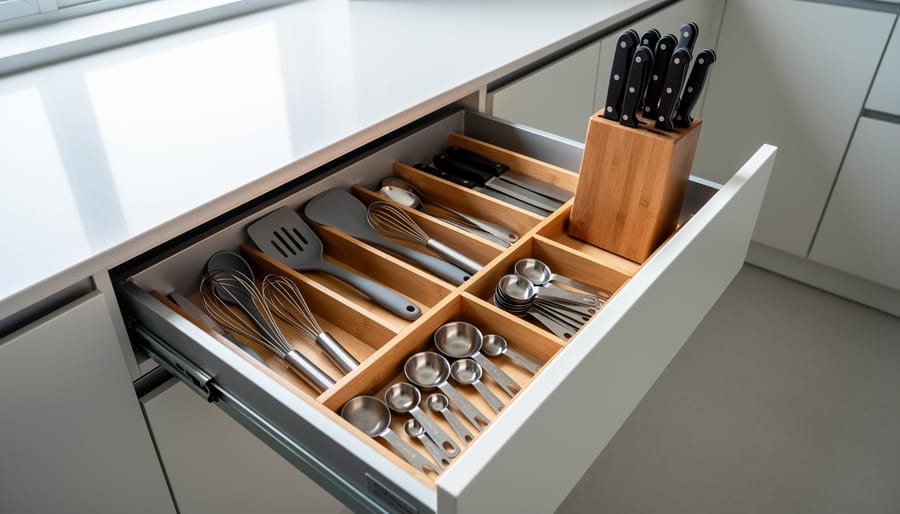
Drawer dividers are genuinely life-changing. Dedicate one drawer to cooking utensils with clear sections for spatulas, whisks, and serving spoons. Another gets divided for cutlery. When everything has a designated slot, you’ll actually put things back because it’s easier than leaving them out. That’s the secret: organization that requires less effort than chaos.
Bedroom Sanctuaries Start with Smart Storage
Your bedroom should feel like the one place in your home where your mind can finally stop making lists. That only happens when your storage systems work so smoothly that you forget they’re there.
Start with your closet, which doesn’t need an Instagram-worthy transformation to function beautifully. Matching hangers create instant visual calm (yes, it actually matters), while grouping clothes by type and color makes getting dressed feel less like archaeological excavation. Store out-of-season items in labeled boxes on upper shelves. If you struggle with morning allergies, closed storage helps control indoor allergens by keeping dust off your clothes.
Your nightstand deserves better than becoming a graveyard for receipts and forgotten water glasses. Keep just three categories here: what helps you sleep (a book, perhaps your CBD skin care routine), what you need first thing in the morning (phone charger, glasses), and maybe one small decorative element that makes you smile. Everything else goes elsewhere.
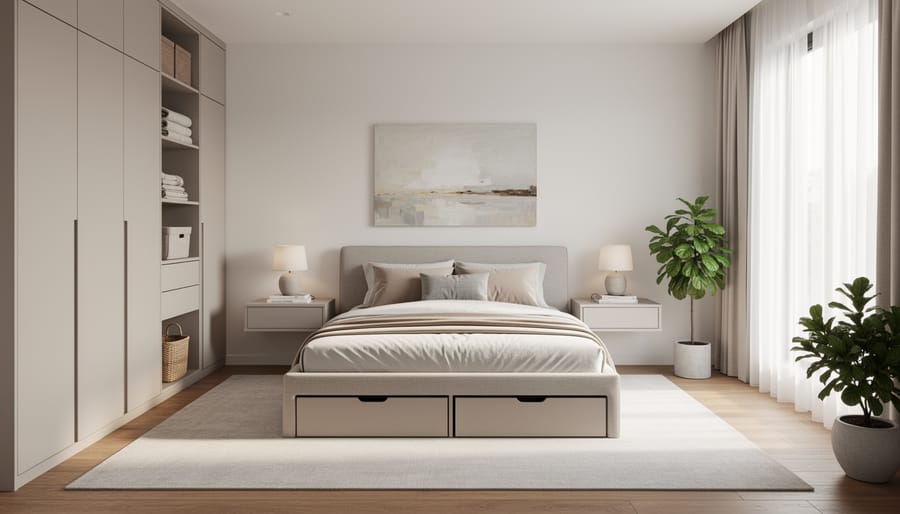
Under-bed storage works wonders if you choose low-profile containers that slide smoothly on any flooring type. Avoid the temptation to stuff random items there. This space works best for seasonal bedding, extra pillows, or shoes in clear boxes. The moment under-bed storage becomes a hiding spot for things you don’t want to deal with, it stops serving your sanctuary and starts creating invisible stress.
Decor Choices That Do Double Duty
The smartest decor investments hide their practicality behind beautiful facades. These pieces earn their keep by solving storage problems while elevating your aesthetic, and the best part? Nobody realizes they’re looking at organization disguised as design.
Woven baskets have evolved far beyond rustic farmhouse vibes. In 2026, sculptural baskets made from water hyacinth, seagrass, and even recycled materials are trending accessories for the home. Stack them in corners to corral throw blankets, use lidded versions on open shelving to hide everyday clutter, or place oversized baskets near entryways for shoes and bags. The texture adds visual warmth while containing the chaos of daily life.
Mirrors do more than reflect light. A large leaning mirror in a bedroom or dressing area creates a designated getting-ready zone, subtly organizing your morning routine. Mirrored console tables in entryways provide surface space for keys and mail while making small spaces feel twice as large. The reflective surface tricks the eye into seeing organization even when things are not quite perfect.
Wall hooks have shed their purely utilitarian reputation. Statement hooks in brass, matte black, or ceramic finishes turn coats, bags, and hats into a curated display rather than a pile on the floor. Install them at varying heights in mudrooms or behind bedroom doors. The key is treating them as decorative elements first, choosing designs you would hang even without anything on them.
| Decor Piece | Organizational Benefit | Style Versatility | 2026 Price Range |
|---|---|---|---|
| Console Table with Drawers | Hides mail, keys, charging cables while providing display space | Works in entryways, hallways, behind sofas | $200-$800 |
| Ladder Shelf | Vertical storage with open display, leans against wall | Bathrooms, bedrooms, home offices | $80-$300 |
| Ottoman with Storage | Seating plus hidden compartment for blankets, toys, magazines | Living rooms, bedrooms, play areas | $150-$500 |
| Floating Shelves (set of 3) | Displays collections while keeping surfaces clear | Any room, adjustable arrangement | $60-$250 |
Console tables are workhorses pretending to be show ponies. Choose one with drawers or lower shelving and suddenly your entryway has a home for everything that used to land on the kitchen counter. Style the top with a lamp, a small plant, and maybe one beautiful object. The drawers below handle the mess you do not want guests to see.
Bookshelves are not just for books anymore. Modern shelving units with a mix of open and closed storage let you curate what shows and what hides. Display your prettiest dishes, plants, or art books on open shelves while closed cabinets conceal office supplies, board games, or that tangle of electronics you cannot bring yourself to sort. The 2026 trend leans toward modular systems you can reconfigure as your needs change, making them genuine investment pieces.
The trick with all these items is choosing quality over quantity. One stunning piece that solves a real problem beats five mediocre ones that collect dust. Look for solid construction, timeless finishes, and designs that genuinely match how you live. Your home will thank you for the clarity.
The Color and Texture Strategy Nobody Talks About
Your brain processes color and texture before it registers individual objects, which means these elements can quietly do organizational heavy lifting while you’re not even aware of it. When you choose a cohesive color scheme for a room, you create visual calm that makes clutter less noticeable and helps items belong together even when they’re not perfectly arranged.
Light neutrals remain dominant in 2026, but with a shift toward warmer undertones, think oat, warm taupe, and soft terracotta rather than stark white or gray. These shades enlarge spaces while hiding dust and minor imperfections better than cooler tones. Pair them with one or two accent colors that repeat throughout the room in small doses: throw pillows, storage baskets, book spines, and decorative objects. This repetition creates visual zones without physical dividers, making even busy surfaces feel intentional rather than chaotic.
Texture matters just as much as color for organized living. Smooth surfaces show every fingerprint and dust particle, while textured materials like linen, rattan, ceramic, and matte-finished wood conceal daily wear. A nubby linen basket holds the same stuff as a sleek plastic bin, but it looks deliberate rather than apologetic. Layering textures within your chosen color palette adds depth and interest while maintaining the visual cohesion that makes organization feel effortless.
The current trend among Canadian designers emphasizes natural, tactile materials that age beautifully rather than showing wear. Woven storage, stone accents, and raw wood finishes all support this approach while complementing neutral palettes.
Dark accent walls have resurged for 2026, particularly in rich navy, forest green, or charcoal. These create depth in small spaces and anchor floating shelves or gallery walls, making collections look curated rather than cluttered. The darker backdrop also hides wall imperfections and makes lighter furniture pop without requiring perfect styling.
Avoid the temptation to match everything perfectly. Rooms that use varied textures within a tight color range feel collected and lived-in, which paradoxically makes them more forgiving when life gets messy. Your color and texture choices should support your actual life, not demand perfection you can’t maintain.
Small Space Solutions for Real People
Living in a smaller space doesn’t mean accepting chaos or sacrificing style. It means getting creative about every square foot and making intentional choices that work harder for you.
The biggest mistake people make in small spaces? Buying storage solutions before understanding what they actually need to store. Start by editing ruthlessly. That bread maker you used once in 2024? The duplicate mixing bowls? They’re stealing precious real estate. Once you know what stays, you can organize it properly.
Vertical space becomes your best friend in compact homes. Floor-to-ceiling shelving draws the eye upward and makes rooms feel taller while providing serious storage capacity. Install floating shelves above doorways for books or seasonal items. Use the backs of closet doors for everything from jewelry organizers to cleaning supplies. Wall-mounted fold-down desks give you a workspace that disappears when you’re done, and pegboards in kitchens or home offices turn walls into functional, customizable storage that also looks intentional.
Furniture selection changes the game. Look for pieces that earn their keep through multiple functions. Ottomans with hidden storage provide seating, a footrest, and a place for blankets. Coffee tables with shelves or drawers keep surfaces clear. Beds with built-in drawers eliminate the need for a separate dresser. Murphy beds or wall beds can transform a living room into a guest room overnight. In 2026, furniture designers are finally making dual-purpose pieces that don’t scream “I live in a studio apartment”, they’re genuinely attractive.
Mirrors multiply space visually. A large mirror opposite a window bounces light around and creates depth. Mirrored closet doors serve double duty. Even a collection of smaller mirrors arranged gallery-style on one wall expands the perceived room size.
Color strategy matters more in tight quarters. Light, neutral walls make spaces feel airier, but that doesn’t mean boring. Add personality through textiles, artwork, and accent pieces you can swap out seasonally. Painting the ceiling slightly lighter than walls creates height. Using the same flooring throughout eliminates visual breaks that make spaces feel chopped up.
Clear furniture and glass tables maintain sightlines, preventing that claustrophobic feeling. Curtains hung high and wide make windows appear larger. Choosing fewer, larger pieces over many small items reduces visual clutter.
The goal isn’t making your 600-square-foot apartment look like a suburban house. It’s creating a space that feels open, organized, and completely yours, regardless of the actual square footage.
When to DIY and When to Call in Help
Let’s be honest: some home projects are therapeutic Sunday afternoons, and others are expensive lessons in why you should’ve called someone three hours ago.
Deciding between DIY and professional help isn’t about skill level alone. It’s about time, tools, and whether the project will prevent bigger problems down the road. That floating shelf you want to install? If it’s going on drywall and holding family photos, grab your level and YouTube tutorial. If it’s supporting heavy kitchen storage above a tile backsplash, a handyman’s expertise prevents costly repairs when it crashes down at 2 AM.
- Complete control over design decisions and pace of work
- Significant cost savings on labor, especially for straightforward projects
- Personal satisfaction and skill development that transfers to future projects
- Flexibility to adjust plans mid-project without renegotiating contracts
- Time investment can stretch weeks when life interrupts, leaving rooms unusable
- Mistakes with structural elements or installations create safety hazards and expensive fixes
- Missing specialized tools means either buying equipment you’ll use once or compromising results
- Physical limitations or accessibility needs make some tasks genuinely unsafe to attempt alone
The sweet spot for DIY includes drawer organization systems, painting accent walls, installing peel-and-stick wallpaper, and arranging furniture. These projects forgive mistakes and don’t require permits or structural knowledge.
Professional help shines for custom closet systems, electrical work for new lighting fixtures, deep cleaning that incorporates antimicrobial elements before reorganizing storage areas, and any project involving weight-bearing installations. Professional organizers bring fresh perspective when you’re emotionally attached to clutter, while handyman services prevent the cascade effect where one botched job creates three maintenance emergencies.
Think of professional services as preventative organization. Properly installed shelving won’t sag and damage walls. A professional deep clean before reorganizing prevents mold and allergens from settling into your new systems. Sometimes the best DIY decision is knowing when to delegate, protecting both your home’s integrity and your weekend sanity.
Your home doesn’t need to be perfect. It just needs to work for you.
The truth is, thoughtful organization and beautiful decor aren’t about achieving some Pinterest-perfect ideal. They’re about creating a space that supports your actual life, reduces daily friction, and maybe even brings you a little joy when you walk through the door. When your home functions well, everything else gets easier. You spend less time searching for things, less energy managing chaos, and less money on last-minute replacements because you couldn’t find what you already owned.
That’s the real transformation here, and it carries a message of hope for anyone feeling overwhelmed by their space right now.
Start small. Choose one drawer, one shelf, one corner that’s been nagging at you. Maybe it’s that entryway table where mail piles up, or the kitchen counter that never seems clear. Address that single spot with intention. Find it a beautiful container, give everything a designated home, remove what doesn’t belong there. Then stop and notice how it feels.
Home transformation isn’t a weekend project. It’s an ongoing conversation between you and your space, a gradual process of figuring out what works and what doesn’t. Some solutions will stick. Others won’t, and that’s fine. Your needs will change, your style will evolve, and your organization strategies should shift right along with them.
The goal isn’t a showroom. It’s a home that serves you, supports you, and occasionally surprises you with how smoothly things flow. Your space should adapt to your life, not the other way around.